The different ways to create 3D models
Every new 3D modeling learner, at some point in their learning path, asks what the main modeling types are. The typology can be based on fundamental principles. Let's list a number of common types of 3D modeling:
-
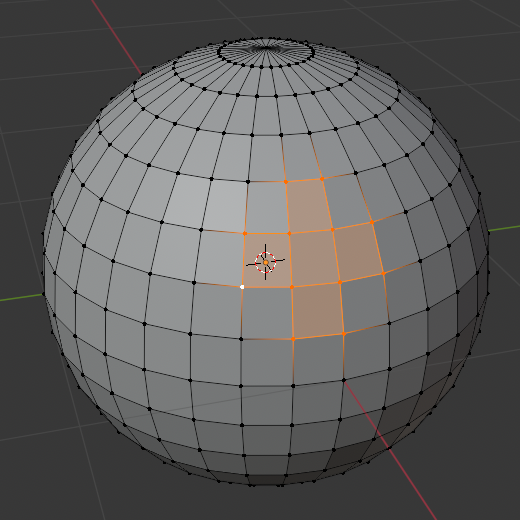 Polygonal modeling is the most widely used type
of 3D modeling. You create objects from a mesh of triangles or
quads, which involves manually editing individual vertices of a
polygon.
Polygonal modeling is the most widely used type
of 3D modeling. You create objects from a mesh of triangles or
quads, which involves manually editing individual vertices of a
polygon.
-
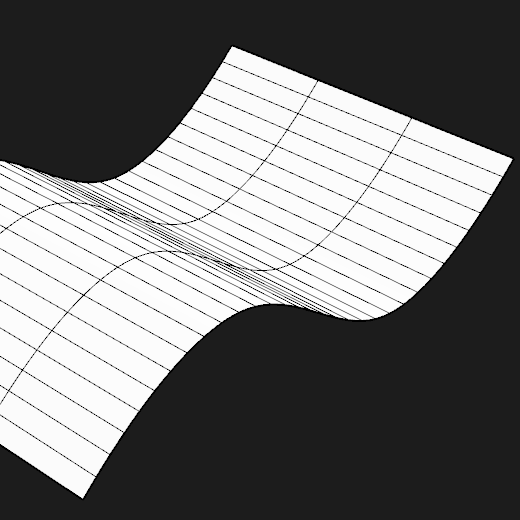 Surface modeling focuses on organic or
aerodynamic geometries, commonly seen in automotive, aerospace,
and product design.
Surface modeling focuses on organic or
aerodynamic geometries, commonly seen in automotive, aerospace,
and product design.
-
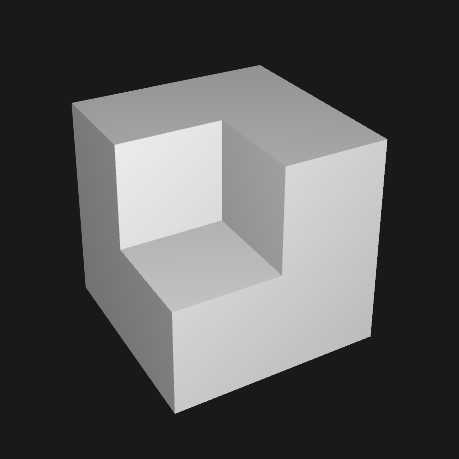 Solid modeling represents primitive forms and
actual volumes. You can build more complex shapes from them.
Solid modeling represents primitive forms and
actual volumes. You can build more complex shapes from them.
-
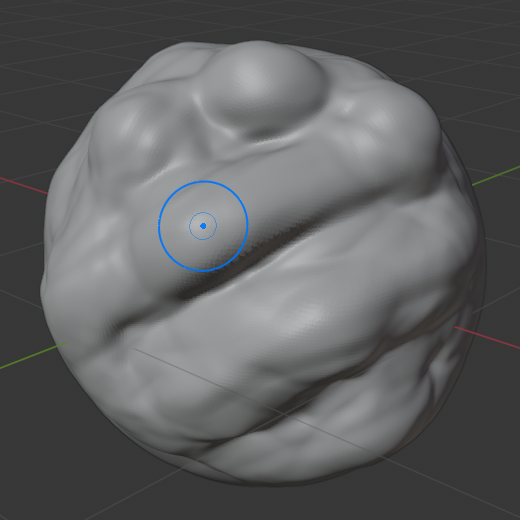 Digital sculpting is the process of manipulating
a high-resolution polygon mesh using dynamic topology. Brushes
(tools) apply displacement to vertices along their normals (the
directions they face).
Digital sculpting is the process of manipulating
a high-resolution polygon mesh using dynamic topology. Brushes
(tools) apply displacement to vertices along their normals (the
directions they face).
There are a number of other terms in 3D modeling that are either included in the mentioned above, or are broader in meaning, or are often used interchangeably:
- Parametric modeling. Parameters such as dimensions, angles, or mathematical formulas drive the geometry. If you change one value, the entire model automatically updates to reflect that change while maintaining relationships.
- NURBS (Non-Uniform Rational B-Splines) modeling. A mathematical modeling method used to create smooth, high-precision curves and surfaces. This approach uses mathematical formulas to define geometry.
- Subdivision (SubD) modeling. A technique that combines polygon modeling with the smooth, curved results of NURBS.
- Procedural modeling. A technique that uses algorithms and rule sets to automatically generate 3D geometry.
- Hard-surface modeling This is more of a style of 3D modeling than a type. In contrast to organic modeling (living-world objects), hard-surface modeling focuses on clean lines, sharp edges, and smooth surfaces.
- Voxel-based (volumetric) modeling. Builds objects using volumetric pixels (voxels), a tiny 3D cubes arranged in a grid that fill the volume.
- Photogrammetry. A technique in which multiple images of an object are captured from different angles, allowing specialized software to reconstruct its shape.
You are certainly familiar with the CAD/CAM term, so it would be redundant to write on it.
At the end of the article, a scripting approach to 3D modeling using a programming language is also presented. We will discuss the relationship between 3D modeling and programming languages in more detail in the future.